
Ever found yourself staring at a world map, scratching your head and wondering, “Where on Earth is Iran?” You’re not alone. This intriguing country often gets lost in the shuffle of its more famous neighbors, but it’s time to shine a spotlight on it. Nestled between the Caspian Sea and the Persian Gulf, Iran boasts a rich tapestry of history, culture, and geography that deserves a closer look.
Whether you’re planning a trip, brushing up on your geography skills, or just trying to impress your friends with your newfound knowledge, understanding Iran’s location is key. So grab your compass and get ready to navigate through the fascinating world of Iran! You might just find that this captivating nation is more than just a dot on the map.
Overview of Iran’s Geography
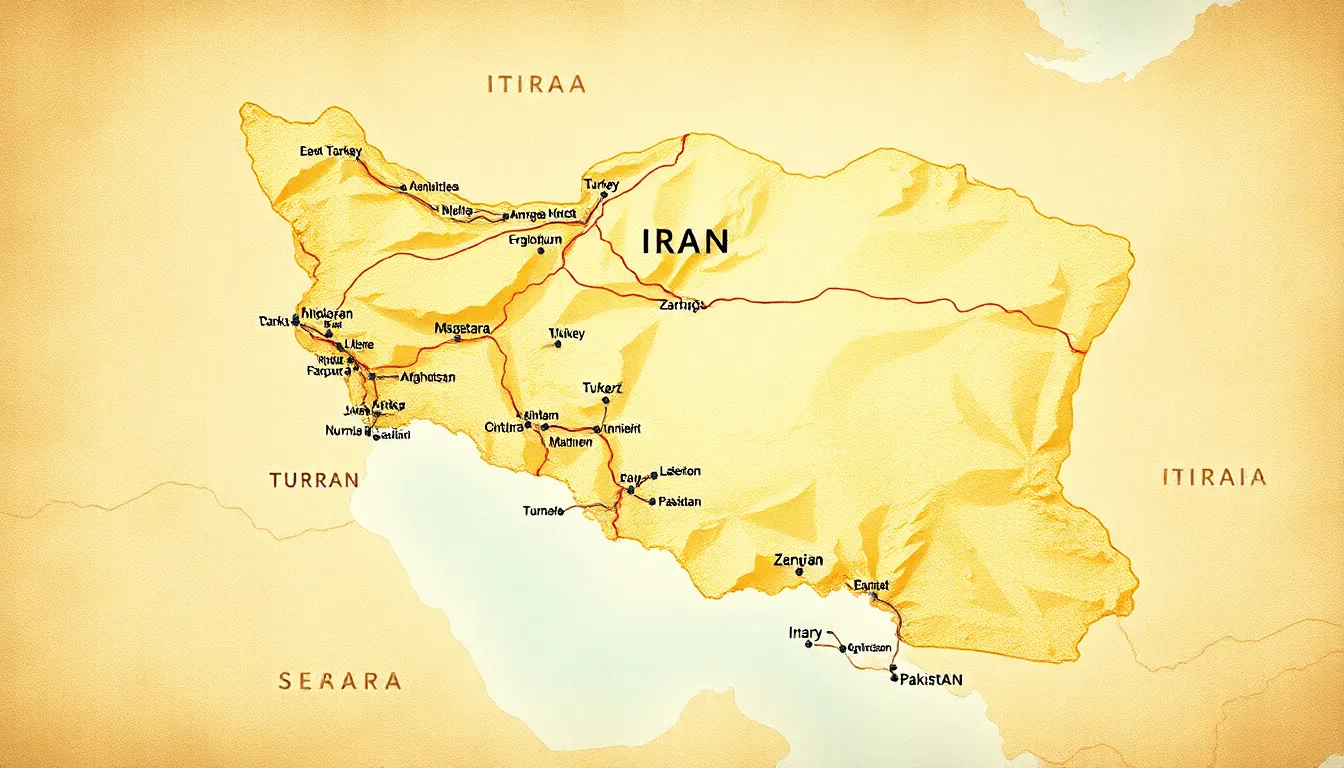
Iran, located in the Middle East, occupies a strategic position between the Caspian Sea and the Persian Gulf. The country shares borders with multiple nations, including Turkey, Iraq, Afghanistan, and Pakistan. Its diverse landscape features mountains, deserts, and plains, contributing to its complex geography.
Mountains dominate the northern and western regions, particularly the Alborz and Zagros ranges. These mountain ranges significantly influence the climate and the ecosystems within Iran, showcasing varied flora and fauna. Deserts, such as the Dasht-e Kavir and Dasht-e Lut, cover substantial areas, presenting unique geological formations and harsh conditions.
Several major rivers flow through Iran, including the Karun, Zayandeh Rud, and Karkheh. These waterways provide vital resources for agriculture and support various habitats. Iran’s climate ranges from arid to semi-arid, with variations influenced by altitude and proximity to the Caspian Sea.
Coastal regions exhibit different climates compared to the inland, characterized by milder temperatures and higher humidity. The Persian Gulf coastline features numerous islands, including Qeshm and Hormuz, which are known for their natural beauty and economic importance.
Urban centers like Tehran, Isfahan, and Shiraz play significant roles in Iran’s cultural and economic landscape. Each city showcases distinct historical and architectural landmarks. The geography of Iran not only shapes its environment but also influences its rich cultural heritage and history.
Locating Iran on a World Map
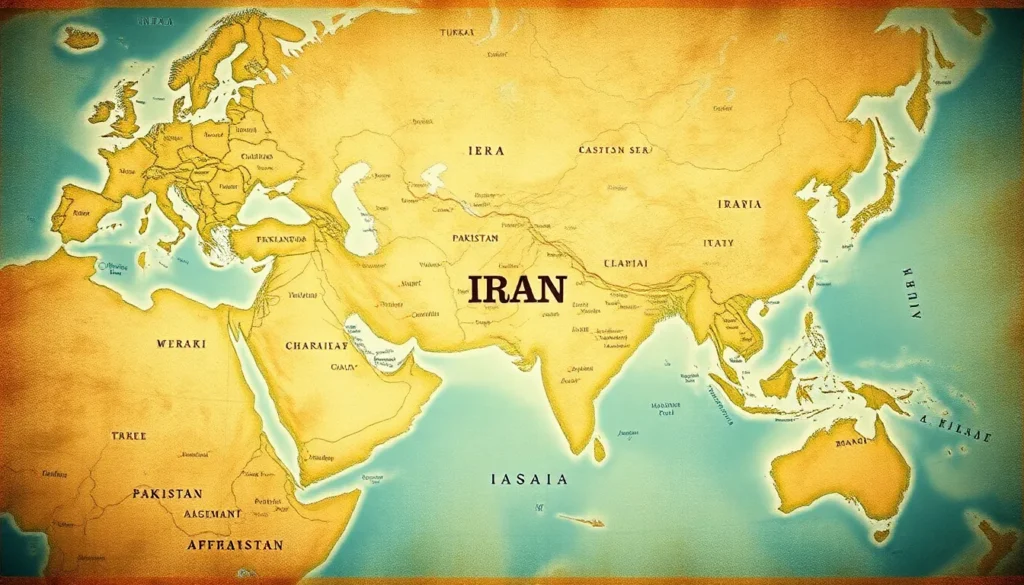
Iran occupies a significant position in Southwestern Asia. This country lies strategically between two important bodies of water: the Caspian Sea to the north and the Persian Gulf to the south.
Surrounding Countries
Turkey borders Iran to the northwest, while Iraq lies directly to the west. Afghanistan and Pakistan mark the eastern boundaries. Armenia and Azerbaijan also share borders, adding to Iran’s diverse regional interactions. It’s important to note that these borders are not just lines on a map; they represent complex cultural exchanges and historical ties. Each neighboring country contributes to the geopolitical landscape, influencing Iran’s trade and diplomatic relations.
Major Bodies of Water
Iran’s coastline stretches approximately 1,700 kilometers along the Caspian Sea and the Persian Gulf. The Caspian Sea, the largest enclosed inland body of water in the world, provides key resources and supports local fisheries. Conversely, the Persian Gulf offers vital shipping routes and is critical for oil exports. Additionally, the Gulf of Oman, extending from the southern coast, links Iran to major international trade routes. Each water body plays a pivotal role in Iran’s economy and ecology, shaping its interactions with neighboring nations and the global community.
Key Geographic Features of Iran
Iran, known for its diverse geography, features prominent mountain ranges, vast deserts, and expansive plains that shape its environment. These elements significantly influence the country’s climate, ecosystems, and human activities.
Mountain Ranges
Iran boasts two major mountain ranges, the Alborz and the Zagros. The Alborz mountain range runs from the Caspian Sea to the central plateau, rising over 18,000 feet at Mount Damavand, the highest peak in Iran. These mountains not only provide stunning landscapes but also create microclimates that support diverse flora and fauna. The Zagros mountains extend from the northwest to the southeast, hosting many valleys and plateaus, crucial for agriculture and livestock. These ranges play a vital role in the country’s water supply, as they collect precipitation and maintain river systems.
Deserts and Plains
Iran features several significant deserts, including Dasht-e Kavir and Dasht-e Lut. Dasht-e Kavir, located in the north-central region, is characterized by salt flats and rugged terrain. It experiences extreme temperatures, ranging from scorching summers to freezing winters. Dasht-e Lut is known for its stunning landscapes, with the Lut Desert holding the record for the highest surface temperature ever recorded on Earth. In contrast, the fertile plains, such as the Khuzestan Plain, support extensive agriculture. These plains benefit from river systems, which enhance crop irrigation and contribute to local economies.
Historical Context of Iran’s Location
Iran holds a pivotal position in historical narratives, influencing trade, culture, and politics. Situated at the crossroads of the Middle East and Central Asia, it’s been a vital hub for various civilizations. The Silk Road’s routes once passed through Iran, facilitating exchanges between the East and West. This added layers to Iran’s rich tapestry of history, as merchants and travelers traversed its terrains.
Ancient Persia emerged as a powerful entity, with its empire spanning vast regions. Notable empires included the Achaemenid, Parthian, and Sassanian, all asserting control over territory that now constitutes modern Iran. These empires thrived on strategic positioning, connecting regions with diverse cultures and promoting economic growth.
Neighboring countries shaped Iran’s historical context significantly. Iraq’s proximity saw many interactions, both peaceful and tumultuous, over centuries. Meanwhile, the influence of Turkey helped establish cultural and political interactions that affected governance and society. Land connections with Afghanistan and Pakistan also fostered trade and migration, enriching Iran’s cultural diversity.
Throughout history, various invasions and conflicts impacted Iran’s borders. The Mongol invasion in the 13th century and the Arab conquest introduced new cultural elements while altering demographic landscapes. Such events have left lasting impressions on Iran’s identity, which continues to evolve.
Modern geopolitical dynamics add further complexity to Iran’s location. The ongoing relationships with regional powers and global superpowers shape its strategic significance. Over the past decades, negotiations surrounding nuclear capabilities and economic sanctions have highlighted Iran’s geopolitical importance on the world stage.
Overall, the historical context of Iran’s location reflects a blend of cultural, economic, and political influences, underscoring its importance in both historical and contemporary landscapes.
Iran’s geographical and historical significance is undeniable. Its unique position between major bodies of water and neighboring countries fosters a rich tapestry of cultural exchange and interaction. By understanding where Iran sits on the map, one can appreciate the depth of its history and the complexity of its modern-day dynamics.
Exploring Iran offers insights into not just its landscapes but also its pivotal role in global trade and diplomacy. This country is more than just a location; it’s a vibrant hub with a legacy that continues to influence the world today. Whether for travel or education, delving into Iran’s geography and history reveals a wealth of knowledge waiting to be discovered.